

For many employees, the first month in a new operational role is one of the most vulnerable periods in their working life. During this time, individuals are learning unfamiliar environments, processes, equipment and expectations, often while trying to demonstrate competence and commitment.
Evidence from regulators and safety research consistently shows that new starters face a higher likelihood of workplace injury compared with more experienced colleagues.
According to the Health and Safety Executive, workers who are new to a job are at greater risk of injury than those who have been in post longer. HSE analysis of workplace injury data has identified a clear relationship between length of service and accident rates, with newer workers disproportionately represented in reported incidents. This pattern is particularly evident in higher-risk sectors such as construction, manufacturing and utilities.
International findings reinforce this trend. The Occupational Safety and Health Administration has highlighted that inadequate training is a contributing factor in many serious workplace incidents, particularly where employees are exposed to hazardous environments without sufficient preparation or supervision. Research across multiple jurisdictions shows that a significant proportion of reportable injuries occur within an employee’s first year, with risk highest in the early months.
Why the First Month Carries Greater Risk
There are several consistent factors behind elevated first-month injury rates in operational settings.
- Unfamiliar environments: New starters are still learning site layouts, hazard locations, emergency procedures and safe systems of work. Limited situational awareness increases the likelihood of error.
- Task inexperience: Operational roles often involve specialist equipment, working at height, confined spaces or hazardous materials. Without practical, structured training workers may not fully understand the consequences of incorrect actions.
- Cognitive overload: The volume of new information presented during induction can reduce retention. When training is rushed or overly theoretical, critical safety messages may not translate into safe behaviours.
- Pressure to perform: New employees frequently feel the need to prove themselves. This can lead to risk-taking, reluctance to ask questions or bypassing procedures to keep pace.
- Inconsistent induction standards: Where onboarding varies between departments or sites, safety expectations may be unclear or poorly reinforced. These factors are compounded in roles involving fire safety responsibilities, working at height, confined space entry and emergency response duties.

The Role of Structured Training
Regulatory guidance consistently emphasises that employers must provide suitable and sufficient information, instruction and training. Effective training is structured, practical and role-specific. They are reinforced through supervision and ongoing development rather than delivered as a one-off event.
High-quality training reduces uncertainty, improves hazard recognition and builds competence under realistic conditions. It also strengthens safety culture by demonstrating that risk management is a priority from day one.
How Training Reduces New Employee Safety Risk
One of the most effective ways organisations reduce new employee safety risk is through structured workplace safety training that builds competence, awareness and confidence from day one.
How HFR Solutions CIC Supports Organisations
At HFR Solutions CIC, we design and deliver end-to-end training packages tailored to each organisation’s operational profile and risk landscape.
Our training includes:
- Fire safety
- Working at height
- Health and safety
- Confined space
- Emergency response
- Offshore & onshore wind
We develop bespoke training aligned to your sector, workforce experience and compliance requirements. This ensures new entrants receive structured foundations while experienced personnel continue to develop and refresh their skills.
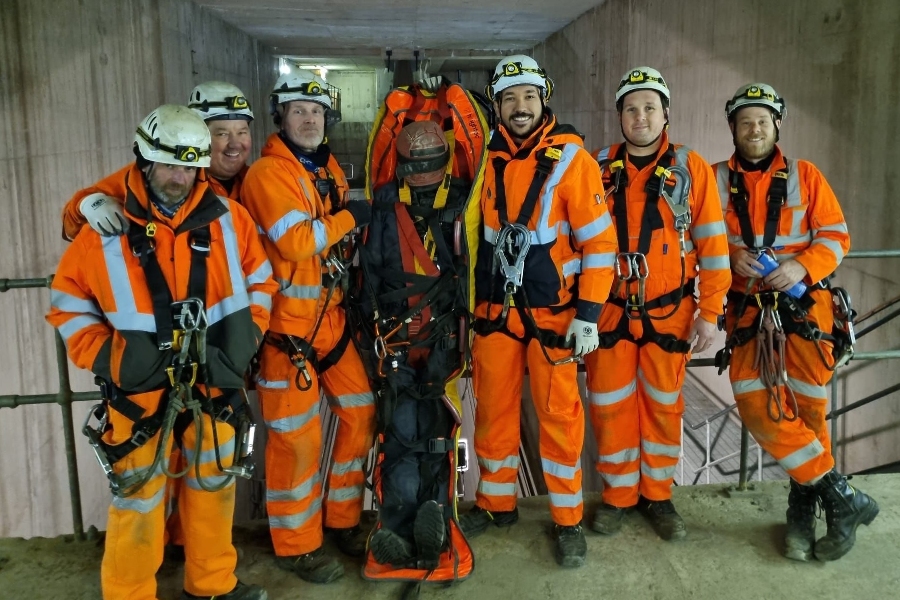
Training can be delivered on your site or at our purpose-built training centre in Hessle. Our facilities are designed to replicate operational environments and include the UK’s tallest training tower at 46 metres, enabling realistic working at height and emergency response exercises.

Developing the Next Generation of Operational Professionals
Each year, we are involved in RWE’s apprentice selection programme, supporting the development and assessment of future industry professionals.
This involvement reflects our commitment to building competence from the very beginning of a career. Early development, structured assessment and high training standards reduce risk and build confidence long before individuals enter high-hazard environments.
Building Safety from Day One
Evidence shows that new recruits are more exposed to operational risk. The most effective way to reduce that risk is through structured, high-standard training delivered from the outset and reinforced over time.
Investing in competence, confidence and capability protects your people and strengthens organisational resilience.
If you would like to review your current training approach or explore a bespoke end-to-end package, our team would be happy to discuss how we can support your organisation.
📩 Get in Touch
Email: customer@hfrsolutions.co.uk
Call: 01482 398521
Connect: Find us on LinkedIn
Comments are closed